Showing posts with label christianity. Show all posts

Tuesday, May 4, 2010

A light in that darkened cinema...

“Paint a stone red and it becomes a god… But never solve your problems yourself. Pray five times a day, ring a bell in a temple and leave everything to God—we want to do nothing ourselves.”

-Abhishek Bachchan in “Delhi 6”


Fig1. If you watch one nontraditional Bollywood movie, watch this one

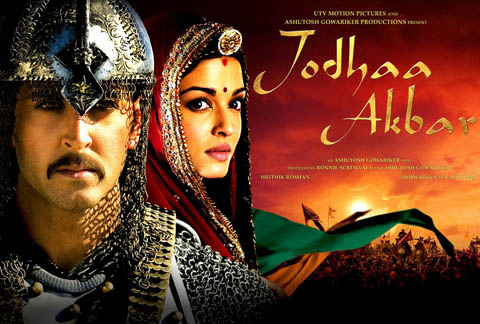
Ashutosh Gowariker’s sweeping historical epic Jodhaa Akbar dramatizes the true story of the Mughal Empire in the 16th century—a period when Islam was spreading well into South Asia under the rule of the Emperor Akbar (“great” in Arabic). The Emperor marries a beautiful and fiery Indian princess in order to quell the belligerance of the Rajput people and cement his role as the ruler of Northern India. One of the central tensions of the film is fueled by the fact that Akbar, a Muslim, and Jodhaa, a Hindu, fall in love despite their traditional differences. Their mutual respect for one another’s faiths and values leads to Akbar’s reputation for generosity and religious tolerance during his rule.

The 2008 film Thoda Pyaar, Thoda Magic is an almost Disney-style family film about an angel who gets sent by God to earth to watch over a family of orphaned children. The main characters, four children of varying ages, are visiting Los Angeles with their new foster father. When a tragedy befalls them, they turn to the most available “temple” in town: a Christian church. When they enter to pray for help, one child wonders if it’s okay to pray there, since they are Hindus. Another child offhandedly remarks that whether it’s Jesus, Vishnu, Ganesha—it’s all the same, insinuating that their prayers will be heard by God no matter where they are.

One of the orphans—adopted by the previous parents—wears a traditional headwrap, identifying him as a Sikh. At one point in the film, he laments the fact that he is a Sikh, because the other children at school bully him. His foster father cheers him up, explaining how important it is to be a Sikh, pointing out their reputation for having great courage.
http://bollycorner.files.wordpress.com/2009/08/jodha-akbar.jpg
Fig2. Possibly the most beautiful epic you'll ever see

The popular Rab Ne Bana Di Jodi is set in Amritsar, where the Sikhs built the famous Golden Temple. That many people of varying religions are allowed to worship there is testament to the ideals of Sikhism, which is often described as a hybrid of Hindusim and Islam. Within the film, the main characters—a newlywed couple—go to the temple at plot points when they need to seek understanding and guidance.

In the 1971 film Anand, an Indian Christian nurse prays to Jesus for a patient’s health. When the Hindu patient hears of this, he jokingly frets over whether or not Jesus and Krishna will fight over who gets to help him.

Unlike Hollywood, the folks in Mumbai don’t gag on overt religious themes and trappings within their films. Hindu, Islamic, and Sikh traditions and ideas crop up all the time, which was great for my education. I can site dozens of examples, but most of the prominent religious activities are apparent from the obligatory clichés that are lovingly included in the movies:

1) Weddings: almost always a backdrop or at least a major plot point in the stories of arranged versus love marriages, tradition versus modernization, caste disputes, and feminism.
2) The traditional mother: whether she henpecks, consoles, or encourages her children into whatever choice they make in life, she’s always seen doing household pujas (prayers) or visiting the local temple to implore the Lord’s guidance in family matters--you know, Jewish stuff ;)
3) Holidays and festivals: they may not need an excuse for dancing and partying, but a Diwali, Holi or a Lohri is always exploited for its potential as a big musical number and joyous celebration with lights, bonfires, food, costumes, and colorful powder tossed in the air.

http://www.indiaweekly.com/dvdImages/b4646.jpg
Fig.3 Come for the cuteness, stay for the traditions

You may say, wait a minute, there are plenty of Hollywood films that show Christian or Jewish ceremonies and holidays that Americans love. We have the great Biblical epics like Ben Hur, The Ten Commandments and The Rope! Look at the sheer volume of Christmas movies out there!

The big difference here is that Christmas movies are rarely about Jesus and the epics are seldom about religious debate. Christmas themes are Christian in origin: peace, rebirth, giving, miracles, etc., but are non-denominational (e.g. The Chronicles of Narnia). In the short-lived TV series Aliens In America (that’s for another blog post entirely!), Raja, the teenage Pakistani exchange student visiting a small town in Wisconsin, wonders aloud why Jesus is so fat in all the Christmas decorations, then realizes, “Oh, that is Santa Claus!”

The epics we know and love are few and far between, and even something like the more recent Kingdom of Heaven (2005), which was severely underrated when initially released, was actually maligned for its deliberative treatment of religion and morality even though it boldly tackled some major religious and political issues that are as relevant today as they were during the crusades. Movies like The DaVinci Code and Passion Of The Christ deal with religion and faith directly, but this happens so rarely in the American film landscape that they attract a disproportionate amount of attention.

kingdom.jpg image by italianbranch
Fig.4 The Director's Cut knows best

The “Christian” weddings we see in secular Hollywood movies are set in churches, sure, but they don’t deal with God’s plans for the couple. It’s always about cold feet, whether the bride or groom cheated on each other or if someone is going to break up the wedding.

Explicit religious reflection is not the norm for Hollywood. In Bollywood, it’s standard operating procedure. I am constantly struck by the frequency of religious discussion within Indian films. They are saturated with themes of religious identity, interfaith marriage, karma, destiny, traditions and responsibilities to perform religious rites.

In Bollywood’s version of My Best Friend’s Wedding, all the same American conflicts are included, but there are constant references to how matches are made in heaven, what the Lord has planned for the couple, turning to Hindu astrology to determine an auspicious marriage date, and the main characters are shown praying in front of a shrine dedicated to Krishna in hopes of gaining insight and guidance with all their familial issues.

Sometimes marriage issues aren’t as easily overcome as male rivalries for a woman’s heart. In Yash Chopra’s classic Veer-Zaara, which is based on a true story of a Muslim Pakistani woman falling in love with a Hindu Indian man, deals with the Romeo and Juliet-like theme of forbidden love in modern India, where the politics and emotions created by the Partition of British Colonial India in 1947 still affect people today. Traditional ties between Muslims and Hindus were severely strained by the horrific events of Partition, and the bridging of that religious divide through love and marriage is a common plot point in several Bollywood films.

http://www.shah-rukh-khan.info/veer-zaara/shahrukh_khan_veer_zaara_wallpaper_12.jpg
Fig.5 Who'd have thought Hindu-Muslim relations were so romantic?

The festival scenes always include a song, and the songs incorporate ancient religious imagery or mantras lifted from scripture every time. Characters are constantly shown attending temple services and engaging in prayer. Often the geographical settings, such as Varanasi (Benares), Hrishikesh, and Amritsar, are places of worship and pilgrimage.

One explanation for the prevalence of religious stories and themes in Indian movies is the pluralist nature of Hinduism itself. It is distinguished by its inclusivism, as it has no absolutely unified dogmatic creed. Hinduism was originally an umbrella term for the various religious traditions of India, which included many gods and demi gods or devas. Often villages and towns each adopted their own patron devas, depending on the stories and legends of the geographical area.

In Gowariker’s 2004 film Swades (“Motherland”) the main character visits the town of Charanpur (derived from the word for “feet”), which is so named because it is believed that the Hindu god Ram and his goddess wife Sita left footprints in the hardened mud nearby. Another town up the road may just as easily be named for another deva with an equally sacred and eponymous relic.

http://www-scf.usc.edu/~india/images/event/swades_sp2010.jpg
Fig.6 An inspiration to return to your roots, and have faith

Recall that in Temple of Doom, Indy and his companions arrive at a small impoverished village whose fate is undeniably linked to the relic of the stolen Shankara stone. The stone is a lingam, a common physical representation of the virility of Shiva. Lingams are indeed believed to be charged with power and strength, but the glowing diamonds inside are a dramatic Hollywood appurtenance.

Sure there are multitudes of devas to keep track of, but Hinduism isn’t technically polytheistic. Every one of the gods and goddesses we’ve heard about have evolved from a single creator god, Brahma, and all are avatars, or differing images, of Brahma. An avatar is like a facet in a diamond—it’s part of the same stone, but seen on a slightly different surface or angle.

It can also be thought of in this way: Think of your mother. You see her as your mother. Your dad sees her as his wife. Her mother sees her as daughter. Her friends see her as a friend. Her brother sees her as sister. Yet she is still the same person. She has many avatars, depending on who sees her, but they are all looking at the same person.

Hindu gods and goddess also have an evolutionary aspect to their existence. Due to the effects of the laws of karma, the avatars of say, Vishnu, appear on Earth at varying periods, each time manifesting as a more wise and powerful and loving being. Vishnu was once a fish (Matsya), a turtle (Kurma), a lion (Narasimha), then the popular human gods of Rama, Krishna, and Buddha. It’s said that when the Earth is polluted and society is corrupt, Vishnu will eventually visit humankind as Kalki and help those souls who lived with good karma in their lives.

With a concept like that, it’s easy to understand why the children in Thoda Pyaar, Thoda Magic believe that even Jesus, who has a comparable role in the Bible’s book of Revelation, can be considered another of Vishnu’s great avatars.

http://www.asiaarts.ucla.edu/media/images/chute.jpg
Fig.7 The Ramlila performed in Swades

Bollywood audiences never question or resent this propensity to showcase religious activities because Hinduism and all its interpretations, which have been around for 4,000 years, is sewn right into the fabric of Indian life. It’s always there, and every schoolchild knows the stories of Rama defeating Ravana to rescue Sita, the tale of Ganesha obtaining his elephant head, and how the river Ganges came down to Earth from heaven. Hindu culture is a national tradition, and it influences citizens’ everyday lives whether they’re Hindu, Muslim, Sikh, Jain, Buddhist or Christian.

This doesn’t necessarily lead to peace and harmony, though. People within certain villages or even city blocks worship one deva more than another, or one neighborhood is majority Muslim while the adjacent one is majority Hindu. Identity wars crop up similar to those of street gangs.

Delhi 6 (2009) exemplifies one such conflict. When American-born Roshan travels with his grandmother back to her original home in Delhi, he encounters both Delhi’s deep humanity and superstitious nature first hand. The neighborhood they reside in is being terrorized by the kala bandar (black monkey), some unknown troublemaker that steals goats and sabotages public property. The tension comes to a head, and the Hindus accuse the kala bandar of being a Muslim, and the Muslims accuse it of being a Hindu. They even accuse Roshan of being the monkey because he is an outsider from America. Interfaith friendships are broken and the peace of the community is fractured until the tragic dénouement, and both sides are shamed into learning a hard lesson about living up to the “bigheartedness” of Delhi.

It’s a rich, beautifully constructed film full of complex characters and deep emotional moments that cover the gamut of modern Indian struggles: feminism, generational divisions, arranged marriage, American cultural influences (Indian Idol, anyone?), religious superstition, emerging technology, and national/religious identity. The cameo appearance of Amitabh “Big B” Bachchan as Roshan’s dead grandfather crystallizes the generational theme, since Roshan is played by Amitabh’s real-life son, Abhishek. Anyone familiar with their very celebrated personalities would be especially touched by the significance of the scene they have together. Recall that in Slumdog Millionaire, the young Jamal is so desperate to meet his favorite movie star that he jumps into a river of shit and climbs out just to get his autograph. Who on Earth is worth such a fuss? Amitabh Bachchan. Hands down. The man is his own deva.

http://graphics8.nytimes.com/images/2009/02/20/arts/20delhi_600.jpg
Fig.8 Delhi hai mere yaar (Delhi is my friend)

For my birthday one year, my sister, who knows my penchant for studying the world’s gods (movie stars or otherwise), gave me a copy of Sanjay Patel’s “Little Book of Hindu Deities.” All the great gods are in there, and beautifully illustrated in bright crayon colors in an appealing big-eyed-cartoon Hello Kitty style. Each has a one-page summary of their significance and story, but these are intensely simplified from the massive epics of Hindu scripture.

One Hindu epic is the Ramayana, which depicts the journey of Lord Ram’s life story and teaches on how to fulfill life’s duties with virtue and integrity. A major turning point in the story—the abduction of Ram’s wife Sita by the evil Ravana—is portrayed as a play in both Swades and Delhi 6. These plays, or lilas (“divine pastimes”) are often put on during Indian festivals and dramatize the classic stories of Hindu gods and goddesses to teach a lesson on scripture or morality.

Bollywood filmmaking plainly reflects the ancient and deeply ingrained qualities of India’s dramatic storytelling tradition, lending it the ability to reveal the complex beauty of Hindu beliefs and culture. The movies informed my curiosity and spurred me to read Hinduism books and scripture. As a result, it’s all a little less exotic now. Busting into Indian dances is normal and to be expected, and the actors and actresses are as familiar to me as anyone else I love in Hollywood movies. Any jokes or jabs or insults I hear regarding India or its people feels very personal to me now, and it gets more personal every time I eat a new curry recipe or see a new film. It's family now.

https://blogger.googleusercontent.com/img/b/R29vZ2xl/AVvXsEjxo05SfdgObNc55EA-yFD72rLFT_0pV6IPrKdJXbfLQpR3UixZSCHq4YGaDNHXhF_9zN12freIeRtYQOdvHQIe0zsru3n424Yn-22o585wnBFcsAhGdo1Oa6fmbXibZgWkEJtxHjdSNec/s400/karan_arjun_b.jpg
Fig.9 SRK was so YOUNG!

When I saw Karan Arjun (1995), starring a very young Shahrukh Khan just before his days as the ginormous and influential star he is now, I was fascinated by the outlandish plot. Karan and Arjun are brothers in a small village who are killed unjustly and their mother prays to the goddess Kali to reincarnate them so they can grow up and come back to avenge their deaths as well as the death or their father by a man jealous of their family’s wealth. They are subsequently reborn and seventeen years later, the brothers visit the village. They are totally unaware of their associations with it, but through some cosmic influence, they soon realize their duty to their mother and their father and set out to kill the man responsible for their original deaths.

That man, who also worships Kali but with decidedly un-kosher evil intentions (Kali looks scary, but she’s actually a loving mother goddess), is portrayed by Amrish Puri, the same actor who plays the Kali-worshipping baddie Mola Ram in Temple of Doom. Until his death in 2005, Amrish was a veteran Bollywood character actor, starring in literally hundreds of films since 1970.

The Möbius strip of pop culture works in mysterious ways.

Sunday, April 4, 2010

Critical Mass

“For Christ plays in ten thousand places, lovely in limbs and lovely in eyes not his.”
-Gerard Hopkins


https://blogger.googleusercontent.com/img/b/R29vZ2xl/AVvXsEjfqvvjJ1aNkVYOINqcTuNs3RE43ixwQPx1_KfTIfiAm0X_cesXn2zoYZ57P7W0Tsek8LneUQYGJHfwIvG5-pbBx5XwDEmwREnNwATQ79ItaVKP97eVIhdrQJ-ktWvpR5hbHfEhXyS8P72r/s400/jesus-motivational-poster+mcs.jpg
Fig.1 Eggs are for omelets, silly rabbit

My little cousin was raised Catholic. She went to a Catholic private school until eighth grade, serves at mass, goes to many church functions and camps and jokes about the priests’ varying sermon-giving skills with my grandma around the Easter dinner table.

One Easter Sunday we sat around and discussed the resurrection story, spun it into contemporary language, and in the end, realized that it was actually the craziest Spring Break “Disciples Gone Wild!” vacation story ever.

Just imagine Jesus explaining it to his mother:

“I don’t know what happened. One minute I was at a party, drinking with my buddies, the next, I wake up in a cave wrapped in a shroud. Then I looked at my hands and went, ‘Whoa, where the hell did those come from? And all these scars on my back and my head and this gash in my side… I swear, I had no clue what went on between Passover dinner and the cave, so I called Father and he moved the stone out of the doorway for me and went to find the guys.

“I asked Peter and Paul what happened. They were all like, ‘Dude, we thought you were dead,’ and I was like, ‘You morons!’ Son of God here! I am one with the Father and the Holy Spirit! Get with the program!

easter lol
Fig.2 TTYL

“They said that after the dinner we went to Gethsemane and got into so much trouble. Judas sold me out and the police came and arrested me and took me to trial and made me drag a cross through town and crucified me! Can you believe that? Wait, you saw all that? Holy shit. I don’t remember a thing.

“I mean, gese, listen: we came into Jerusalem, got A-list treatment at first, did some seriously awesome miracles… we were on a roll. Sure, Thomas forgot to book the restaurant I wanted for Passover, and the new place only let us all sit on once side of the table, but he came through. We were having fun! And then all this crap happened. *sigh* Tell you what. Life down here sucks. I’m out of here in 40 days. No, really, I’m gonna go live with Dad for a while. I think it’ll be the best thing for everyone.”

I apologize to Jesus for that, but I don’t think he sweats the small stuff.


http://cowsarejustfood.files.wordpress.com/2009/04/jesus.jpg
Fig.3 Bad carpentry

As I mentioned above, I have Catholics in my family. My grandmother grew up on a tobacco farm in Puerto Rico and has been Catholic all her life. I’ve been to mass a few times for happy and sad functions, and my cousin, with whom I am very close, is very active in her Catholic youth groups. My brother-in-law grew closer to his Catholicism while abroad in the Army. It’s not foreign to me at all, and frankly, compared to my protestant Christian upbringing, it never seemed all that different from what I saw at the Methodist church.

Stephen Colbert showed me the difference, though. My in-depth Catholic education sprung from him, and trickled into several pools and eddies along the way.

It began with one of Stephen’s favorite guests: Father James Martin, SJ, a.k.a. “The Colbert Report Chaplain.” He first came on the show to discuss the newly discovered letters of Mother Theresa that outlined her lengthy “dark night of the soul” and struggle with her thoughts on the “absence of God” in her life. Stephen, in his uppity and ironically iconoclastic “Stephen” guise, instantly condemned her for her lack of faith and Father Martin defended her, explaining the difference between not believing in God and believing in God’s absence.

The conversation was conducted in a manner that fans have come to expect from Stephen Colbert: hard-lined but respectful. His words and reactions are almost always hard-lined on the surface, but the questions and retorts actually display Stephen’s deep understanding of and respect for religion, especially the nuances of Christianity.

Fig.4 If Edward Norton doesn't play him
in a biopic, I don't know who else will

Father Martin, gamely playing along with Stephen’s otherwise inflammatory inquiries, displayed that winning combination of spirituality with a sense of humor and I couldn’t resist. I went to the library and checked out his book, My Life With The Saints. With this book, he sets out to provide a bit of a primer on why Catholics revere the saints, one of the biggest sticking points in the tension between Catholicism and protestant Christianity. Written in a warm, inviting, and good-natured tone, his stories of how several different saints informed touchstones or turning points at various periods in his life beautifully revealed the great value in this tenant of Catholicism that I had never really considered before, and it inspired me more than I could have imagined.

In the book, he details his childhood, his conversion from a business career in corporate finance to Jesuit seminary, his missionary trips to Uganda and Jamaica, his pilgrimage to Lourdes and spiritual retreats, and all along the way, he is introduced to different saints’ life stories. Each story somehow corresponds with a struggle or miracle in his own life, and in this way, he befriends them, coming to know them and all their flaws and profound faith in God as close companions in his heart and soul. As a Jesuit, Father Martin interprets this experience of the saints as just another way to see God in everything, and to learn from such visions and visitations.

Fig.5 I bring you Peeps

As I read My Life With The Saints, I came to realize how much we shared in our spiritual experience. None of my saints appear on silver medallions or on prayer cards or will ever be canonized by the Pope, but in that they pop up at advantageous times in my life and help guide it toward enlightenment. Fox Mulder and Dana Scully are as good as Ignatius of Loyola and Thérèse de Lisieux. Charlie Chaplin is my Patron Saint of Creativity. Michael J. Fox is my Patron Saint of Persistence. Dr. Temperance “Bones” Brennan is my Patron Saint of Logic. Paula Deen is my Patron Saint of Indulgence. Connie and Katrina are my patron Saints of Nerdiness. Elissa Hunter is my Patron Saint of Exploration… and Manatees.

It’s a distinctly Society of Jesus trait to “love God in all things—and all things in God,” which is a challenge to see God everywhere and learn from it. It’s a lesson not unlike that of Buddhism. If God is Wisdom, Truth, and Love, then Wisdom, Truth, and Love must be sought in all things. I see them in my saints everyday.

Happy Easter!


http://mediocritycomplex.com/uploads/jesus.aliens.gif

Sunday, March 21, 2010

The Amish got it goin' on

“You can preach a better sermon with your life than with your lip.”
-Amish proverb

http://blog.ivman.com/wp-content/AmishBoysBaseball.jpg
Fig.1 All work and some play makes an Amish boy

The Amish don’t have podcasts. Can you believe that shit? I would love to hear the serene tones of Pennsylvania Dutch accents expound upon quilting techniques and tips on how to avoid tourists trying to take their photographs.

If you’ve seen Witness, you’ve seen half of what decent pop culture has to offer regarding the Amish. Devil’s Playground is the other half, and it’s illuminating cinema to say the least. It’s a documentary about the tradition of rumspringa, the time in an Amish teenager’s life when they are allowed to explore and experience the “English” world outside their insulated farming communities. The purpose of this is related to the old Anabaptist/Mennonite belief that a baby cannot be properly baptized. A person has to make a willful, adult decision to have communion with God, so the kids are allowed to see what their options are before being encouraged to return and focus on entering the community.

Devil’s Playground first outlines the basics of Amish Mennonite life, then follows around a handful of Amish kids on their rumspringa. During this time, wide-eyed kids go out to parties, dance and drink too much, drive around in cars, and sometimes take drugs. Very few decide that the outside life is for them, reflecting the high retention rate (between 80-90%) among the Amish denominations. Pretty awesome for a group who don’t include medicare or any government benefits whatsoever. The super-fast barn-raising thing, though… FEMA would’ve benefited from utilizing that sort of community work ethic.

http://www.myromancestory.com/myBlog/uploaded_images/witness1-743816.jpg
Fig.2 Harrison Ford is too sexy for his pockets

The Amish don’t join the military, but they don’t apply for Social Security benefits either. No phones, electricity, or fancy clothes. They’re as “off the grid” as anyone can get. On the surface, the rules against things as banal as buttons seem odd, but what I found most appealing about the Amish is their sound reasoning behind everything they do or don’t do. Shirt pockets aren’t allowed because there’s the possibility you can put a flower or other pretty trinket in there, which can lead to pride. The ego-loathing Buddhist in me can’t argue with that logic.

Another thing is that they’re willing to make very small accommodations when new technology comes along. Gas-powered tilling machines, for example, are allowed in some Amish communities, but they’ll strip the wheels of the rubber tires because the rubber makes working the fields too easy and a sudden increase in ease could lead to laziness and lack of appreciation for hard work. They don’t have phones in their houses because it decreases sense of community by reducing face-to-face communication. Phones are also looked upon as an intrusion of the outside world, which interrupts daily life. I couldn’t agree with that one more. Being Amish is almost worth it not to have telemarketers call ten minutes into every DVD you start watching.

Those Amish DVD players, by the way, fueled by the alcohol they don’t drink.

http://101tees.com/blog/wp-content/uploads/2009/04/amish-gone-wild-full.gif
Fig.3 Light switches: overrated

Technology jokes aside, the Amish have got it goin’ on. They are old school devoted Christians. They live the holy life to a T. You remember how they handled that schoolhouse shooting in Lancaster County in ‘06? They not only thought no ill of the guy who killed five of their young daughters and injured five more, they went to his home and comforted his widow and family. I bow to the Amish. They get it. They know how to live a life of purpose: to make the most awesome peanut butter pie on the planet. Okay, that’s not their entire life’s pursuit, but if you’ve ever been to Yoder’s restaurant in Sarasota, you might be convinced it is.

http://www.dinesarasota.com/wordpress/wp-content/uploads/2009/05/yoders_signjpg.jpg
Fig.4 They do believe in watching cable

Whenever I see my father operate one of his numerous coffee machines, the bit of Amish in me rears its simple head. He has this one multi-purpose monster that makes lattes, espresso, and regular coffee, all through the inclusion of an extravagant quantity of little plastic “pods” filled with perfectly pre-measured coffee grounds and powdered milk. It’s fast and easy and looks so Star Trek-like with its futuristic minimum brain-power procedure. Juxtaposed against my old-school pour-boiling-water-into-a-cup-and-add-tea-leaves-and-wait-for-five-minutes breakfast ritual, his method of caffeine intake appears insanely wasteful. Tastes great, I’ll be the first to admit, but anti-Amish.

If we happen to be in the kitchen at the same time at the morning hour, I repeat my Amish-inspired mantra, “If it’s too easy, it’s not worth doing.”

http://gizmodo.com/assets/resources/2007/06/AmishSpeedWagon.jpg
Fig.5 True rebellion

This didn’t apply to my orchid-avoidance in my gardening activities, though. I wrote them off as too high-maintenance and I prefer the relatively well-adjusted African violets in my bathroom. That is, at least, until my sister gifted me three beautiful orchids that I have managed to care for so well that I coaxed a flower spike out of one of them in only five months. And guess what? It was totally worth it. I am addicted to the motherly kind of pride I get whenever a spike appears on one of my orchids, and witnessing the blooming bud weeks later is more sweet than the iced tea from Texan Wal-Marts.

Now I’m full of pride. Crap. I will make up for it by ridding myself of buttons.

We all take the rubber off our tractor wheels in our own ways—I make fancy tea the long way and my Dad prefers to sketch his interior design drawings by hand instead of with some expensive computer software—but we mostly leave the tires on in everyday situations. We’re Americans, after all. Not that the Amish aren’t Americans, but they may be too good at Christianity.

Saturday, February 20, 2010

Proud To Be Pagan

“This religion is not a joke. We are not what you think we are from looking at TV. 
We are real. We laugh, we cry. We are serious. We have a sense of humor.
 You don't have to be afraid of us. We don't want to convert you. And please don't try to convert us. 
Just give us the same right we give you—to live in peace.
 We are much more similar to you than you think.”
--Margot Adler

Fig.1 Scared yet?

Everything I ever needed to re-learn about witches I learned from Hollywood AND the people denouncing Hollywood. How many dozens of depictions of witches and witchcraft have I seen in movies and TV? About a hundred dozen more negative ones than positive (or even remotely true) ones. Ever since I was a child, I’ve been bombarded with images and portrayals of evil witches in Disney movies, ugly witches in horror movies, bitchy witches, crazy witches, nasty witches, hungry witches who eat little children, and stupid witches in cartoons. They’re always female, they’re always plotting against the hero, they’re always wild and extreme. A “good witch” was an anomaly, not the norm.

I know America doesn’t like to be accused of flatly discriminating against a religious group by disseminating profoundly unverified and monolithic propaganda in pop culture, but it sure as hell is guilty of it when it comes to paganism. I know why: “unbelievers” have long been held up as the “dark opposing force” of Christianity throughout history. Ancient indigenous pagan peoples in Europe were relatively disorganized compared to the rising Christian population and conquest was a two-fold strategy: seize the land and convert the people. So it went for hundreds of years.

America today is by no means the homogenous “Christian Nation” many people insist upon, but its cultural influences are dominated by Christian views. Naturally, pejorative definitions of anything pagan are to be expected, and are usually informed by casual ignorance rather than outright hatred. The fear of pagans and paganism isn’t fear of evil so much as it is the fear of the unknown, and there is plenty that people don’t know about pagans, and plenty of pagan things that people engage in but don’t even know it.

That’s why I was especially keyed up to study pagan traditions. I knew that watching Harry Potter movies and Supernatural on CW wasn’t quite enough.

http://waywardson.whendarknessfalls.net/wallpaper/supernatural.jpg
Fig.2 I'm here for the sexiness, not accurate portrayals of witchcraft


Broadly defined, the archaic use of the term “paganism” includes anything outside the Abrahamic-based faiths, which is pretty damned broad. Hinduism, Zoroastrianism, Jainism, Shamanism, Taoism, Native American religions, Wicca, Vodou, various world folk religions and Buddhism fall under that category. Basically, anything that doesn’t involve Moses or Jesus or Mohammad is pagan. That’s some group!

Obviously, this is the strict Western perspective. The modern definition accepted in a comparative religions course would be any earth-based religion that may or may not include shamanistic, animistic, pantheistic or polytheistic aspects. That eliminates much of the major “world” religions previously included in the list. But it includes ancient “dead” religions such as those that worshiped the Greek, Norse, Roman and Egyptian gods. The rule of thumb, so far as I can tell, is that what we may consider pagan is any religion that does not include adherence to a precise dogma or a specific scripture. There can be oral traditions and stories, or general guidelines as to the meanings behind practices, but there is no organized collection of progenitorial texts proposing to be the “word of God” or divinely inspired by a deity.

When I think of paganism, I have a whole set of images and concepts defined mostly by American Neopagans (specifically, Wiccans), because they’re the ones making all the awesome podcasts and websites. Wicca, while relatively new on the scene (it gained popularity only within the last century), has its roots in ancient pagan belief systems, drawing spiritual figures and ideas from all manner of sources.

Neopagan-based moral beliefs work on an honor system. Because they don’t have any official scriptures to read and get irrationally adamant about, they function by the Golden Rule or the “Wiccan Rede” which basically says, “If it does no harm, do your will.” Therefore, anybody conducting “black magic” or evil hoodoo should know that they’re in for a world of hurt.

http://homepage.mac.com/eponsworley/iblog/C2111676223/E491863938/Media/Altar.jpg
Fig.3 A helpful diagram for your altar planning

Wiccan practice is definitely a far cry from anything I see on Supernatural. As much as I adore that show (that’s a whole other blog post for later), I know that the only thing they get right is that paganism exists.

A ritual (which may include spell-casting and meditation) is rich with symbolism, employing elements and objects that may evoke fear in some people: fire, a knife, potions, a wand, etc. But each one is represented on an altar for a reason. A candle flame banishes darkness and can be different colors according to the god or goddess the practitioner chooses. The blade (athame) is double-sided and represents the fusion of male and female. It's not necessarily sharp and it's even understood that if the athame is ever used to draw blood, it must be destroyed. The chalice filled with wine is the female womb, a live-giving symbol. The wand is used to focus energy during a ritual. That broom in the corner is not for riding, but for sweeping clean the circle in which a ritual is to take place. The pentagram contains five points for each of the basic elements: fire, earth, air, water, spirit.

Neopagans worship the Earth, the god and the goddess, respect nature and the spirit within all living things. They value life and freedom and expression. They’re all around us, too.

I wanted to post this entry now because it’s Renaissance Faire season here where I live in old snow-free Florida. I’ve been to the Hoggetowne Medieval fest already, which I’ve gone to for three years in a row with my Gainesville friends. I’m preparing to attend the big Tampa Bay Renaissance Festival in March like I do every year as well. It’s a family tradition at this point, and a deliriously enjoyable one as well.

ICN_0087.jpg picture by monsterunderkilt
Fig.4 Fairies keep it in the family

It’s a place where regular Joes mingle amongst everyday regular Joe Pagans without any fear whatsoever on either side. This is not to say that all Wiccans or pagans love Ren Faires or that the people who work there are representative of all pagans. That would be like saying ALL sci-fi nerds love Star Trek and dress up like Spock for sci-fi conventions. That is simply untrue and will probably get you mildly tongue-lashed if said within a ten-foot radius of a comic book store. Not by me, though, I love Star Trek (again, I'll save that for another post).

Based on the wares presented in many of the festival tents and booths--mugs & bowls painted with the names of sabbats, pentacle jewelry, cauldrons, chalices, even witches' hats (they have a sense of humor)--it’s pretty obvious that most the tenants are at least very familiar with pagan culture if they’re not pagan themselves. The art, jewelry, costumes, books, and various appurtenances of Neopagan and earth-based religions are ubiquitous… and completely inoffensive to the festival guests. Sure, they may find some of it fantastical and wild and odd, but it’s expected and generally accepted. The tradesmen themselves are as "out of the broom closet" as they can get at these gatherings, often dressed to the Medieval nines and more than happy to explain the significance of their trinkets.

It’s a breath of fresh (hay, pony, incense, and roasted turkey-leg infused) air.

As a backyard astronomer, I follow closely the movements of the moon and planets and stars. I love gardening and growing special herbs for my meals and teas. I love animals and especially birds for their beauty and idiosyncrasies. I love to meditate outdoors in the open air of nature, under the warmth of the sun. It's not difficult for me to understand many Pagan interests and beliefs. It’s not a stretch for me to recognize the sacred wisdom they seek in their practice. It may seem a stretch for others, and I understand that too. But if you've ever admired the stars, planted a flower, thanked God or the Universe for a beautiful day, or even celebrated Easter (bunnies and eggs are ancient pagan fertility symbols and "Eastre" is the goddess of the Spring), you know more about true paganism than you realize.

See you at the Faire! Blessed be!

Saturday, February 13, 2010

When the saints come marching back

“Saints are the Sinners who keep on trying.”
--Robert Louis Stevenson

DSC02669.jpg picture by monsterunderkilt
Fig.1 St. Louis Cathedral, Jackson Square, New Orleans

The summer of 2004, I was in Gainesville taking my last required summer course so I could graduate one semester early in December. It was a fun class on one of my favorite subjects—Ancient Egyptian history—but there’s only so much hieroglyphics a girl can take, especially if it’s the only class you have with nothing else to do but sit around in your tiny closet of a dorm room the rest of the time. It was a particularly lonely summer.

Luckily, my buddy in nerdiness Elissa came to the rescue. At the time, she lived with her father not far from the campus and she’d break the boredom every so often, but one hot sticky July weekend, she outdid herself and spirited me off to New Orleans.

Her mother lived in Crestview in the Florida panhandle, so we stopped and slept there the first night, then woke up before dawn to make the three-hour car ride to Louisiana. Driving that stretch in her little blue Geo Metro, switching the air conditioning off just to give the little car enough juice to get over each hill, in the Vulcan heat of July in the American South… it was our obligatory college road trip, and we loved every moment.

We spent the daylight hours doing the tourist rounds in the French Quarter, with naught but iced café au laits the color of the Mississippi River and Styrofoam cups of cold beer to cool us down during our tour. It was a long walk filled with trinket stores, voodoo shops, Mardi Gras mask boutiques, the steamboat Natchez, gumbo-serving restaurants, and the St. Louis Cathedral—undoubtedly the most beautiful church I had ever stepped into in my life. Elissa, who had made the Crestview-to-New Orleans visit before with her mom, taught me the wonders of this new world that wasn’t so very far away.

DSC02693.jpg picture by monsterunderkilt
Fig.2 Everyone loves a Boondock Saint

Over a year later, I was in Orlando for a nerd convention—this one the “ElfCon” of 2005, specifically catering to Lord of the Rings fans. Connie, Katrina and I stayed the night before the big day in the hotel, hanging out by the jacuzzi and sipping drinks from the poolside bar. It was to be our last big get together before Katrina moved out to Los Angeles to pursue her career in the TV biz, and we were having the time of our lives.

The morning of the day we were to get our photos taken with Elijah Wood—a massively spiritual event for us—we watched the news in the hotel room. The day before, a hurricane blew through the Keys, and we were worried it would turn north and cancel the convention. Instead, it headed into the Gulf of Mexico, and overnight, it exploded into a massive storm. Luckily, Florida was no longer in its path.

I remember knocking on the bathroom door as my friend was taking a shower and saying, “Hey, Katrina, you’re a Cat Five!”

“What?!” she said, her voice still noticeably shaky despite being muffled by the sound of running water.

“You’re a Cat Five!” I repeated.

She came out of the room and said, “I thought you said my cat died!”

Katrina was a Category Five. And as we walked from the room to the main convention hall of the hotel, the sky was overcast and drizzly, the clouds shaped like faded but distinct bands of a hurricane. It was so big that the weak outer bands covered Orlando even though it was headed straight for Louisiana.

Fig.3 Never again... we hope

June 2008, my sister and her husband invited me to help them move to Killeen, Texas, home of Fort Hood, where he would be stationed. We were to drive out over a few days, stopping in New Orleans for a break halfway through. I was to be their French Quarter tour guide.

Not only were we to grab our beignets and stroll Bourbon Street, we were on a mission—a mission to find saints.

A few weeks before this great road trip was to take place, I was listening to the Saintcast by podcaster Paul Camarata on my computer. He had an interview with Father James Martin about his book and being on TV. I just had to hear him discuss his impression of Stephen Colbert, and I got a little thrill from the interview. Having finished that very fascinating episode, I started in on another one, just to get a better sense of the podcast, whose goal it is to discuss the stories of a few saints in each episode and even go on trips to some of the pilgrimage sites associated with the saints. Some episodes consist of the audio “soundseeing” tour of the places Paul went.

In one episode, Paul interviewed the founder of SaintsforSinners.com—Rob Clemenz’s homespun operation to tell stories of the saints and sell hand-painted saints medals. It was a fairly successful little business based in New Orleans. When Katrina hit, all the medals were washed away, and he was resigned to give up on doing the website and practice law instead. But then he heard some stories from hurricane survivors who pulled up their bootstraps and didn’t give up on their homes and jobs and Rob changed his mind.

Fig.4 Our Lady of Perpetual Help

Today, a Saints for Sinners medal can be found around Bruce Springsteen’s neck, as well as The Tudors’ star Jonathan Rhys-Meyers. Even Paula Deen, the Butter Queen, has a medal. They seemed the perfect souvenir from New Orleans, and I told my sister we had to find them.

Addresses of medal-selling boutiques in hand, we set out for New Orleans. Of course, we were headed for the part of town least affected by Katrina, but I couldn’t help but see the big difference as we drove through the city, even compared to my memories from four years before.

Like a red welt left behind after getting slapped in the face, the damage from Katrina still lingered. It seemed that half the buildings and homes and roads I saw were still damaged and dilapidated, while the other half were brand new from being very recently rebuilt. Our arrival at the Superdome and Canal Street was like coming out of a half-baked virtual reality into an isolated sector of a fully-realized Second Life island. The French Quarter felt untouched. Standing on the boardwalk nearby Jackson Square, one would never know anything resembling the finger of God had ravaged the city to a degree that many people couldn’t imagine it ever being rebuilt and repopulated.

Fig.5 We are New Orleans

In the years following Katrina, I had seen much new coverage and documentaries on the storm’s effect on New Orleans, and contrasting those horrific images with the beautiful ones in my memory of the place was heartbreaking. Adding to that ache, the subject came up in a conversation at my work one day and someone casually tossed off a comment that the place was “sinful” anyway, that if any place deserved it, it was New Orleans.

Astonished at such callousness coming from an observant Christian woman, I tried to disabuse her of the ignorance behind that statement, enlightening her to the profound history and beauty of the city, of the God-fearing people who lived there, of the breathtaking St. Louis Cathedral where many worshiped. I had only seen one part of the city, but I saw enough to know that the world would be a lesser place to lose any part of New Orleans, a city built on its complexity of human experience.

Turns out it’s not hard to find saints in New Orleans. Sure, we had a few hitches in locating our medals in some boutique stores and we did eventually get some, but the real saints of New Orleans are the people who came back. Walking around the Quarter and seeing how many small businesses made the tough decision to start all over for the sake of their lives, for the sake of their hearts and souls, for the sake of their faith that they would resurrect their home so America could still count this jewel of a place in its vast collection… it became clear the real saints had never truly left.

There was no more appropriate souvenir to take home from NOLA than a Rob Clemenz medal. Mine may have a colorful depiction of St. Francis of Assisi on it, but it’s essentially a St. Clemenz medal, Patron Saint of Survivors.

http://assets.nydailynews.com/img/2010/02/09/alg_saints_brees.jpg
Fig.6 We are the Saints

Saturday, December 19, 2009

Orthodox Jew Reggae stars and Islamic Rap artists and everything in between

"My heart, which is so full to overflowing, has often been solaced and refreshed by music when sick and weary."
--Martin Luther

Fig. 1 I Always thought clothes were overkill

I loved Ridley Scott’s Kingdom of Heaven from my first viewing at the theatre, and it wasn’t because Orlando Bloom gets shirtless in it (that’s just one reason). With institutions like Liam Neeson and Jeremy Irons involved, as well as an uncredited Edward Norton performance and Ridley’s signature mise-en-scene, it’s a masterfully illustrated story about the folly of pride and the human necessity to embrace all nations as one human family.

Perfectly underpinning this multicultural theme is Harry Gregson-Williams’ rich tapestry of a musical score. It seamlessly weaves Celtic, Mediterranean, and Persian influences into a set piece that is earthly for its mix of instruments, yet otherworldly because it makes the many cultures responsible for the different styles feel as if they were never separated by land or sea. A favorite thread in this score is the angelic echoing vocals of ancient choral hymns. I noticed the simplicity set me at ease whenever I was studying or reading, and I wanted more.

A search for Gregorian chants on iTunes yielded my now favorite group Sequentia, an ensemble dedicated to resurrecting the canticles of medieval Europe. Both male and female voices in predominantly acapella performances transport me to a musical plateau of serenity. Whenever I listen, I can practically smell the incense and feel the warmth of the sun filtering through the stained glass in colored shafts of light. As a bonus treat, Sequentia likes to toss in a few instrumental pieces that showcase the sounds of traditional strings and woodwinds.

There’s something universal and profound surrounding them. Perhaps it’s the sheer grace of God, or just the incomprehensible Latin, but I prefer to think it’s the purity of devotion that imbues them with comprehensive appeal. They were performed to praise a higher existence, not to deride or condemn, but inform listeners of the deeds and love of God.

In Mary Doria Russell’s exquisite novel The Sparrow, a young man working in Arecibo for the SETI program discovers a signal sent through space and time from a star system a few short light years away. He realizes that it’s a song, which indicates intelligent life. Scientists, humanists, and a Jesuit priest are all brought together by that ethereal music, and all of them travel to this new world on the Jesuit organization’s dime. For the Jesuits, as an influential and financially capable organization in the story, the mission is about finding rare resources that can be brought back to fund their missions on earth. For each of the characters, the journey becomes a spiritual test as they attempt to discover the source of the songs on a strange new planet.

Reading the book, I was surprised how moved I was by the description of the SETI discovery and it had me thinking for days about how I’d react to such a significant event. Hearing a song from an alien world filtering down through the stars and vast chasm of space would be a singular spiritual moment for all humankind.

Earth itself has a diversity of music that might overwhelm an off-worlder first hearing it. Even if they only listened to the religious tracks, they’d be surprised at the variety. I certainly was.

Podcasts, movies and documentaries may not be alien sources, but they provided plenty of absorbing listening from perspectives I never knew existed. Here’s a spiritual playlist of some of my favorites:


http://isoas.files.wordpress.com/2008/09/carrie-1.jpg
“There Is A Tree” by Carrie Newcomer
I heard an interview with this Quaker folk singer/songwriter on Interfaith Voices a while back, and was particularly impressed by the mystic quality of this song and her rich, earthy voice. It invokes a sense of the profound in everyday life, as does Carrie’s entire album “Geography of Light.” My other favorite song of hers, “Where You Been,” makes direct reference to many faiths, revealing the universality and playfulness of spirit.

http://www.inkpot.com/classical/people/sequentia2.jpg
“O Quam Mirabilis Est (Antiphona)” by Sequentia

The simplest, most angelic of Sequentia’s tracks. I have no clue what she’s saying, but it doesn’t beg translation. I feel the love, the dedication, the devotion, the joy. It’s beautiful in its musicality, heartbreaking in its purity.

http://zoharmusic.com/drupal/sites/default/files/erran_head.jpg
“Hannukah on Hannukah” by Erran Baron Cohen
I read an article on Tabletmag.org (formerly Nextbook.org) on a newly released album in December 2008 that was created to “change Hanukkah’s reputation.” It’s called “Songs in the Key of Hannukah” and upon hearing it once through, I decided I could listen to it all year long. It’s composed by internationally acclaimed DJ Erran Baron Cohen, who cranks up the irony of his brother’s anti-Semitic characters by injecting a proud and somewhat fundamentalist Jewish flavor to this holiday album. Lighting the shamash and eating sufganiyot has never been so hip.

https://blogger.googleusercontent.com/img/b/R29vZ2xl/AVvXsEjzik_JUEnu3Mwul-Ye5GrlgNFqM5M2QlaS2nVtnDNiKWA45kRB_HXgjhvsOJMxSdmXbN1xwWxy5s3HpASM0ByAcmcdrZow5j2jsEJ4_o5vwL3Zk3YhY5Vka3ibbLp-YEI34H14rcpc5DM/s400/300px-Bibi_snatam_kaur_may06_104.jpg
“Mul Mantra” by Snatam Kaur

Whenever I hear this song, I’m reminded of the long trip between New Orleans and Killeen, Texas with my sister and her husband. I stared out at the endless Texan grazing land and listened to the Sikhwithin podcast, where I first heard Snatam Kaur’s soothing voice. Turns out she’s something of a rockstar in Sikh circles, a California-born woman who performs kirtan devotional music on peace-promoting world tours. The Mul Mantra is the essence of the Guru Granth Sahib, the official Sikh text, and within its few words, contains dense layers of spiritual concepts. Snatam is such a gifted singer that simply hearing her version of the chant without any previous knowledge of Sikh theology, one can sense the depth and emotion and history suffusing it.

http://www.amdoc.org/pressmaterials/newmuslimcool/images/02_newmuslimcool.jpg
“Welcome Home” by Hamza Peréz
Featured in the excellent PBS POV documentary New Muslim Cool, this inspirational rap serves as a primer for leading a righteous life after leaving jail. Informed by Hamza’s own story as a Puerto Rican ex-drug-dealer in the streets of Pittsburg who converted to Islam, this song cuts through to the core of spiritual conversion: to change your life for the better, forever. The film demonstrates the injustices visited upon Hamza’s mosque community as well as the strength of brotherhood and sisterhood they have to endure life’s hardships, and how Islam always guides them toward kindness and standing up for themselves.

http://run4change.files.wordpress.com/2009/08/matisyahu.jpg
“I Will Be Light” by Matisyahu

Matthew Paul Miller, known by his Hebrew name Matisyahu, was influenced through a youth equally defined by Bob Marley and yeshiva, and his music seamlessly sews together reggae-flavored instrumentals and vocals with Hasidic Jewish theological themes. Another Interfaith Voices discovery, this song, with its “dreadlocks to sidelocks” backstory, struck me as a powerful testament to the dynamism of religion and how beautifully it can evolve and inspire each new generation.

http://userserve-ak.last.fm/serve/500/407400/The+Doobie+Brothers.jpg
“Jesus Is Just Alright With Me” by The Doobie Brothers

I just really love this song. It’s very catchy. Its spiritual message doesn’t detract from its pop cred at all. Anyone can listen to it, whether you’re Christian or not, because it’s stripped of dogma. It’s a simple story of finding Jesus as a friend, and no matter that I’m a Buddhist, I can still agree that Jesus is just alright.

https://blogger.googleusercontent.com/img/b/R29vZ2xl/AVvXsEhwsEAeVVhb8qdfuyBp5BR77HvCtB-CrJ7t1nsUZPcaNndg4BT-SYvfOik7y94e9ZPjYf9_i3_82zLSvhLHLM8I19nbvo7DwM84UqmLid2oLb1Nz_FixrNB99T2Hqq9mpvyC6uP04YGcjHU/s400/ar_rahman.jpg
“Pal Pal Hai Bhaarii” by A.R. Rahman

This one is on the soundtack of the excellent hindi film Swades, and it’s from the scene featuring the Ramlila, the traditional play about Lord Ram’s life and adventures. The lyrics are based on the classical storytelling style and as usual, A.R. Rahman’s underlying score defines itself as anything but simple accompaniment. Find the translation of the story on Bollywhat.com and you’ll enjoy the full impact of the lyrics, both dramatic and mystical.

http://www.globalvillageidiot.net/images/2773.jpg
“Sacred Stones” by Sheila Chandra

Oddly enough, I first heard this song on an episode of Queer As Folk, and it was played during a slow-motion sequence meant to give some pause to the usual fast-paced beats that pump through the heart of Babylon, the characters’ nightclub of choice. I noted its singularity among other songs featured in the show and discovered the meditative quality it had. It’s just the kind of song you’d hear playing in the background at a yoga class, but it constitutes more than your standard ambient vaguely South Asian-flavoured white noise. It combines a handful of religious chants in one song to exemplify the tonal, and, incidentally, the spiritual similarities among them. Listen closely.


“Muestro Senyor Elohenu” by Yasmin Levy
Listening to Vox Tablet one day at work, I heard the story of a woman whose father painstakingly preserved thousands of traditional Sephardic songs sung in Ladino—a Hebrew-Spanish language, an Iberian version of Yiddish. Having a Puerto Rican background myself, and a pretty sharp ear for music, I was struck by the instant visceral reaction I had to her voice. In her interview, she described how her feet stood in three worlds—Israel, Arabia, & Spain—and her multicultural influence was so evident in her songs, the unification of which brought me to tears. It still does, every time. Her music, especially this song, is a manifesto for the brotherhood of human life.

http://www.berklee.edu/images/news/124/howard_shore.png
Twilight and Shadow” by Howard Shore
The Lord of the Rings
trilogy is no doubt three of the most spiritual and soul-searching films of any generation, and the music reflects themes as diverse as the races of Middle Earth. I find this track one of the most essential because it distills the complex bittersweet tone of the entire story into a sad but hopeful hymn that you could drop into a list of songs by Sequentia and not know the difference.

Sunday, December 13, 2009

The Hanukkah bush is still burning

“Does Hanukkah commemorate events profound and holy?
A king who came to save the world?”

“No. Oil that burned quite slowly.”

--Stephen Colbert & Jon Stewart singing “Can I interest you in Hanukkah?”


CIMG1360.jpg picture by monsterunderkilt
Fig. 1 My sister, hungry for Hanukkah

You gotta hand it to Christians. They really have a lot of pizazz in their holiday celebrations. Whatever it means to you, you can’t deny the jocularity of the Christmas season. Pageantry, singing, sparkling lights, tinsel, brightly colored presents and party costumes and dresses--it’s no wonder the English language has developed the expression “Gay as Christmas.”

The Jews, on the other hand, are comparatively “meh” about the old “sensible alternative to Christmas,” Hanukkah. That’s not to say they haven’t tried. I mean, eight days of presents certainly trumps one day, but it’s often described as an exercise in delayed satisfaction instead of a week of gift-giving bonanzas. The food is great, though! What’s more deliciously American than oil-soaked potatoes and jelly donuts? I’m surprised they don’t use that in their marketing campaign more often.

http://gallery.nofactzone.net/albums/userpics/colbertchristmas-03.jpg
Fig. 2 Jon tries to convince Stephen that Hanukkah is cool

For me, celebrating Hanukkah has meant profoundly understanding every nuance in a finely-crafted jokes Jewish comedians make about it. The subtle but illustrative dropping of Yiddish terminology and references to the Maccabean battles of old have proven extremely hilarious in the right context. And I get stares from people who are obviously not Jewish “it-getters.”

Two years ago, I went menorah shopping in preparation of my upcoming Hanukkah festivities. Did you know that you could spend as much on a menorah as you do on a Christmas tree? They last longer though, and many become heirlooms, which certainly sticks with the Hanukkah theme of conservation. Can you imagine having the same artificial Christmas tree in your family for generations? Didn’t think so.

Menorahs are nowhere near as messy, though instead of kvetching about pine needles and preventing the dog from drinking the tree water, I had a festive time scraping melted candle wax off my mantel. A handy tip: to get the wax off the menorah itself, put it in the freezer for an hour, then chip off the frozen wax. Much easier on the lower back than hauling the tree into the attic.

Premium Two-Tone Electric Menorah. by hfabulous.
Fig. 3 The Jewish equivalent of an artificial Christmas tree

The first time I insisted on giving Hanukkah a try, my family already had years of trained experience making latkes. My mom, the multi-talented cook who always loves trying new recipes from all walks of life, taught us the joys of shredding potatoes and squeezing out their copious amounts of water to make the pancakes stay in one piece in the pan. They are, by far, one of the greatest contributions to culinary art ever. Smothered with sour cream and chives (or applesauce, if you’re traditionally-minded) with a side of Hebrew Nationals and some carrot coins… oh baby. It gives you the energy for days worth of dreidel spinning.

We also challenged ourselves to giving eight gifts to each other every evening after lighting the candles. We were already bogged down with buying Christmas gifts, so they usually amounted to very small tokens involving inside jokes and edible treats. My dad, the creative one, came up with an unexpectedly complex plot to crush us with his gift-giving and storytelling prowess. At the time, I’m not sure he fully appreciated what he had gotten himself into, but I’m glad he did it.

Each night, sitting on the sofa in the living room, he revealed a small chapter of a Hanukkah story he had conjured, and each night he gave us something related to the story, much like how Kindergarten teachers use props to read children’s books to their students. It was a story about a young man with a magical “Gelt Horse” and a magical basket that filled up with coins every night so he could save enough money to marry a young lady. Dad gave us each a small plastic toy pony with a Star of David Sharpied onto its rump, then a small basket, then an increasing amount of golden Sacagawea dollars appeared in the baskets. They doubled every night. You can imagine that we ended up with a handsome sum when we ran out of candles.

Fig. 4 The purebred Gelt Horse

Best lesson in saving money EVER.

Thank you, Dad, for making your little girl’s first Hanukkah a memorable one.

As for the real reason people celebrate Hanukkah, its details are thought provoking in their outward mediocrity. Judah Maccabee led the Jewish revolt against the tyrannical Antiochus in Judea around 164 BCE. When the Maccabees took back control of the temple, they found only one day’s worth of the consecrated oil needed for daily ceremonies, but during the eight days it took to make more oil, the oil they had never burned out. The story was considered too recent and inconsequential at the time of compiling the Jewish testament, so it didn’t make the final edit. Hanukkah as a commemoration ranks as a minor holiday compared to Pesach (Passover) or Yom Kippur.

So why has it risen to the rank of the most popularly known of Jewish holidays (in America, at least)? The tradition of gift-giving and the focus on childhood activities may have been installed to give the holiday more chutzpah and a means of Jewish immigrants to assimilate into American culture during the country’s nation-building era. But as Jon Stewart tends to say regarding his own interfaith family’s holiday observations, “Christmas blows the doors off of Hanukkah.”

Fig. 5 Even our dog Harmon got into the spirit

Most fascinating to me, though, is how each traditional image we associate with Hanukkah still steadfastly embodies reference to the Maccabbean story. The dreidel, something so innocuous and seemingly random, has the Hebrew letters Nun, Hay, Gimel, Shin, which stands for the Hebrew phrase: “Nes Gadol Haya Sham” (A Great Miracle Happened There”), referring to the miracle of the eight-day oil. The nine-armed menorah (as opposed to the ancient traditional seven-armed menorah) is actually called a Hanukkiah (related to the Hebrew word for “to dedicate”), denoting its use as a lamp for “dedicating” the new temple that Judah had captured from Antiochus.

Hanukkah, as a minor holiday, is simply not built to be the kind of all-encompassing epic celebration of anything as world changing as a messiah coming to Earth, which is part of the reason why it’s got flyweight muscle in the pop culture match between it and that heavyweight champion, Christmas. Hanukkah basically had the unfortunate luck of occurring adjacent to Christmastime and is compared to Jesus’ birthday by virtue of proximity, which is totally fakakta.

Screenshot2009-12-13at90430AM.png picture by monsterunderkilt
Fig. 6 If Martha Stewart were Jewish...

Hanukkah was designed for something else entirely. It’s a small holiday that has, in the grand history of things, made the others still possible. Hanukkah commemorates the little miracles that make all the difference. Little miracles like oil-fried latkes with sour cream. Mmmm.

Saturday, November 28, 2009

How to win the cosmic war on Christmas

"... the only way to win a cosmic war is to refuse to fight in one."
--Reza Aslan

http://konceptsbykaryn.com/wp-content/themes/blank2L/images/santa-alien-ornament.jpg
Fig. 1 Season's Greetings, Earthlings


At Thanksgiving dinner this year, my uncle made a curious observation about my aunt's shopping behavior. She, my little cousin and my grandma have made it a tradition to wake up at 3 am every Black Friday and rush off to a major mall to take advantage of the bajillions of holiday doorbuster deals that surface every year right after Thanksgiving. I thought it was a harmless tradition, giving those three some time together doing what a large percentage of folks do this time of year. Nothing special. But my uncle mentioned that my aunt would buy one or two of that year's "hot" and "hard-to-find" item for the sole purpose of bragging rights, then return it a few days later. She did it to prove that she had the shopping skillz to grab a certain DVD or toy before anyone else, then get a refund after the stampede of shoppers was over.

I said to my aunt, "You know there are desperate people who would probably commit a hate crime against you for doing that."

She said, "I know!" and laughed.

Fig. 2 The Cathedral of Shopping: The Mall of America

Earlier, while waiting for the turkey to be sliced, I was in my cousin's room, assisting her with decorating some black t-shirts with fabric paint and glitter. She had three of them, each with their names on the back and "Black Friday 09" plastered across the front. They claimed that they all wore the same thing so it was easier for them to find each other if they got lost in the "running of the crazed consumers." I thought it was fairly practical at the time, but in light of my uncle's comments, I saw this Black Friday activity for what it truly was: a sport. They had uniforms and a healthy sense of competition. Well, maybe not so healthy. Shopping for Christmas has become a full-contact sport requiring a certain level of cynicism and defiance with a full-throttle ego boost that accompanies success.

I love my aunt, cousins and grandma dearly, and I'm certainly not judging them for commiting a mild offense against other early bird wacko types who place way too much value on obtaining half a dozen Zhu Zhu robotic hamsters, but seriously... is this the real problem with Christmas?

Fig. 3 Worship the almighty Flying Christmas Presents

The mainstream media outlets (and Stephen Colbert) have been reporting on the so-called "War on Christmas" for years. They focus mainly on Wal-Mart greeters' usage of "Happy Holidays" over "Merry Christmas" and overly PC people shoe-horning in holiday wishes that include Chanukah, Kwanzaa, Eid, Festivus, etc. into their holiday office parties and gift-giving activites. Because God forbid we respect all the less-than-overcommercialized sacred festivals of other religious traditions celebrated by citizens of this country. This hyped-up paranoia about Christmas supposedly getting usurped by other holidays is patently absurd, of course, since the real threat to Christmas is the deep-seated materialism that surrounds it. The true meaning of Christmas, in my opinion, is not at war with outside aggresors, but from within.

Yes, this argument has been raised as well, and by the very same people who bring up the anti-PC argument. I only invoke the argument because as a Buddhist convert, I've had to recently reinterpret my reasons for my continued observance of many holidays, as well as summon a mission statement regarding my observance of Hanukkah, Diwali, Passover, Samhain, Holi, Yom Kippur, etc. in an effort to further my multipraying quest.

Fig. 4 Jon can't believe dreidels can't compete with Santa Claus

I could have woken up one day and played the "I'm not Christian" card and declared that I didn't have to participate in anything that wasn't related to my new spiritual path. Hey, it would save me a shitload of cash and headaches every year, wouldn't it? I could have sat back and amused myself by anthropoligically analyzing all the fun out of these gauntlets people perrenially embark upon in order to please their money gods. It would have been too easy to just excise myself from the holiday fray and meditate on the futility of materialism.

The year I converted myself, that first year I had to experience Christmas without the churchgoing obligations or the latent guilt of not really believing the nativity story and how to reconcile that with the obsession over Santa Claus and elves and fruitcake and inflatable lawn decorations and credit card debt, I was free. I was free to understand.

I understood for the first time how other religions effected Christmas. And despite what I've heard from a particular cynic who shall remain anonymous, it's not a bad thing that Christianity has been touched by religions that came before it. Jesus wasn't born in December, but more likely around the time Jews celebrate Sukkot in the fall. Or perhaps in the spring. Christians today celebrate in winter because that's when pagans celebrate Yule and Saturnalia and other winter festivals, and Emperor Constantine cleverly moved the date to make it easier for pagan converts such as himself. Santa Claus is derived from the Turkish Saint Nicholas and the popular back story of his life is drawn from Germanic folk traditions. Dragging an evergreen tree into your house and lighting it up to remind you that life persists through the bitter winter? How totally pagan of you!

Screenshot2009-11-28at124259PM.png picture by monsterunderkilt
Fig. 5 Jesus wishes he were born on Christmas

Christmas is not "diluted" by these non-Christian influences, but enhanced. It has been enriched by the numerous converts through its history, converts who brought their own flavors to the big melting pot of Christmas. Gift-giving, baking, decorating, visiting with family, and parties have basically become secular activities in December, and this captures the distinctly American influence on Christmas: sharing it with everyone, no matter the race or creed. With this in mind, it's difficult to put stock in the paranoia, the superficial culture war borne out of fear and ethnocentricism. The problem the warriors for Christmas have is with themselves, and unable to appreciate or recognize the beauty of the Christmas collage, they lapse into self-loathing without even knowing it.

Fig. 6 Who's to say the Festivus Pole doesn't enhance Christmas?

I now fully understand what Christmastime means to me: family gatherings, seeing far-flung friends, creating homemade gifts, lighting my menorah, baking Martha Stewart cookies with my sister, watching holiday classics like National Lampoon's Christmas Vacation, Lord of the Rings, and Doctor Zhivago, playing A Colbert Christmas music on an endless loop, enjoying the laughably mild winters of Florida, but still freezing my ass off to see the Geminid meteor shower on a clear cold night.

If Christmas to you means a false sense of "purity" over a rich medley, or if it means casting aside all other holidays in an effort to "preserve" a homogeneous past that never existed, then you're participating in a cosmic war that cannot be won by anyone involved.

I choose not to participate in the cosmic war. I choose to participate in Christmas. It's the more Buddhist thing to do. It's the more American thing to do. It's the human thing to do.

Fig. 7 Totally Kosher.